When
Bookings
Event Type
Lean Six Sigma Yellow Belt
Learn practical tools to spot inefficiencies, reduce waste and support process improvement, and get ready for the official ILSSI certification exam.
- ILSSI exam voucher with one free retake
- Live online via Microsoft Teams
- No prior Lean Six Sigma experience needed
Your first step
The entry point for professionals who want to improve inefficient workflows in their own work.
Practical tools
Hands-on work with DMAIC, the 8 wastes, 5S, root cause analysis and process mapping.
Exam and retake included
The official ILSSI exam voucher is part of the course and includes one free retake.
At a glance
About the course
Lean Six Sigma Yellow Belt is the first step for professionals who want to improve inefficient workflows. Rather than theory alone, the course teaches practical tools to identify inefficiencies, reduce waste and support process improvement in real business settings.
Delivered live online via Microsoft Teams, this interactive course gives you hands-on skills to contribute to organisational excellence and prepares you for the official ILSSI certification exam.
What will you learn?
Core principles and DMAIC
The basics of Lean Six Sigma and the Define, Measure, Analyze, Improve, Control framework.
The 8 wastes and 5S
Spot inefficiencies in daily routines and organise work areas with 5S.
Root cause analysis
Hands-on problem solving with the Fishbone diagram and the 5 Whys.
Process mapping
Map workflows, speak the common language of operational excellence and support Green or Black Belt projects.
Lean tools for improvement
Kaizen, PDCA, Poka-Yoke, SMED, pull and Just-In-Time, Kanban, visual management and standardised work.
Sustaining the gains
Control plans, Gemba walks and a lean leadership style that keep improvements in place.
Who should attend
This course is for people who want to support continuous improvement and earn an internationally recognised certification:
- Team members
- Coordinators
- Managers
- Ambitious specialists who want to support continuous improvement projects
Prerequisites
No prior Lean Six Sigma experience is required. A basic understanding of daily operational workflows is helpful.
What is included
Official ILSSI learner workbook
The official ILSSI learner workbook and reference guide.
Live online training
Interactive training, live online via Microsoft Teams.
ILSSI exam voucher
The official ILSSI examination voucher, including one free retake.
Digital certificate
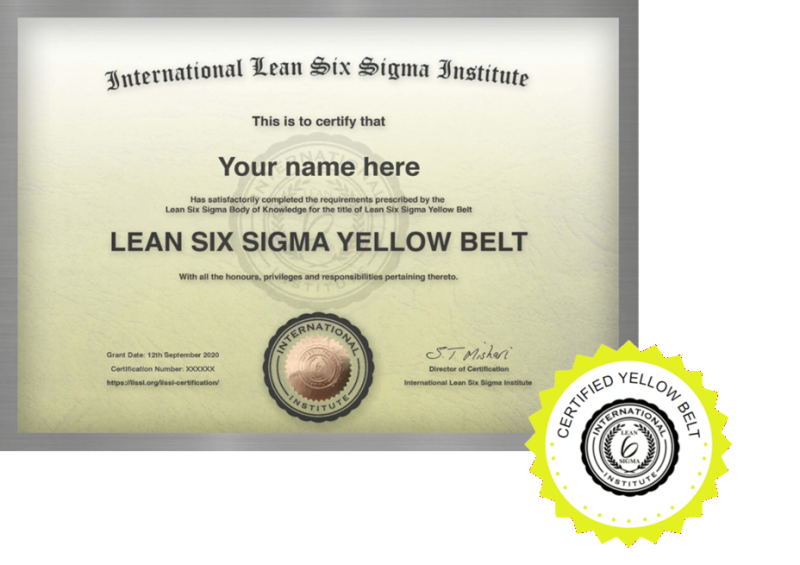
A digital certificate of completion when you pass.
Your trainer
Alexandra Niculae is your trainer for this course.
Language
This course is given in English with English courseware.
Bookings
Log in if you already have an account with us.